











'Keeping the ospreys safe': How Eversource deters ospreys from nesting on poles
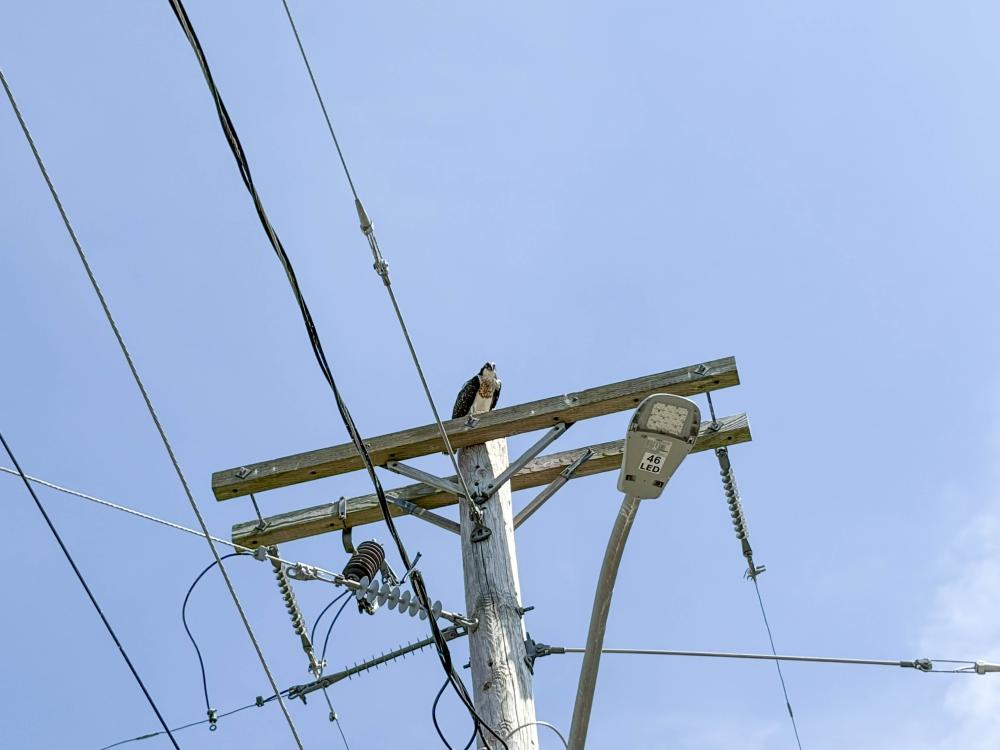 Ospreys return to places where their nests used to be, even after the nests are removed, like this pole in Swifts Beach. Photos by Christian Uva
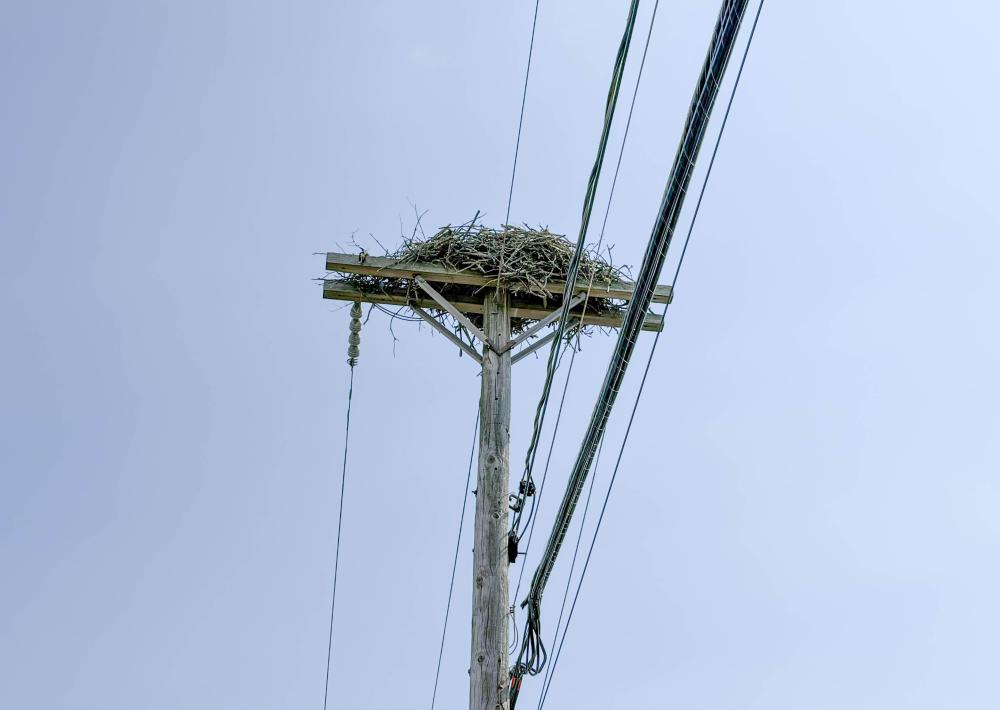 Eversource de-energized this pole along Minot Avenue so ospreys could continue to nest safely.
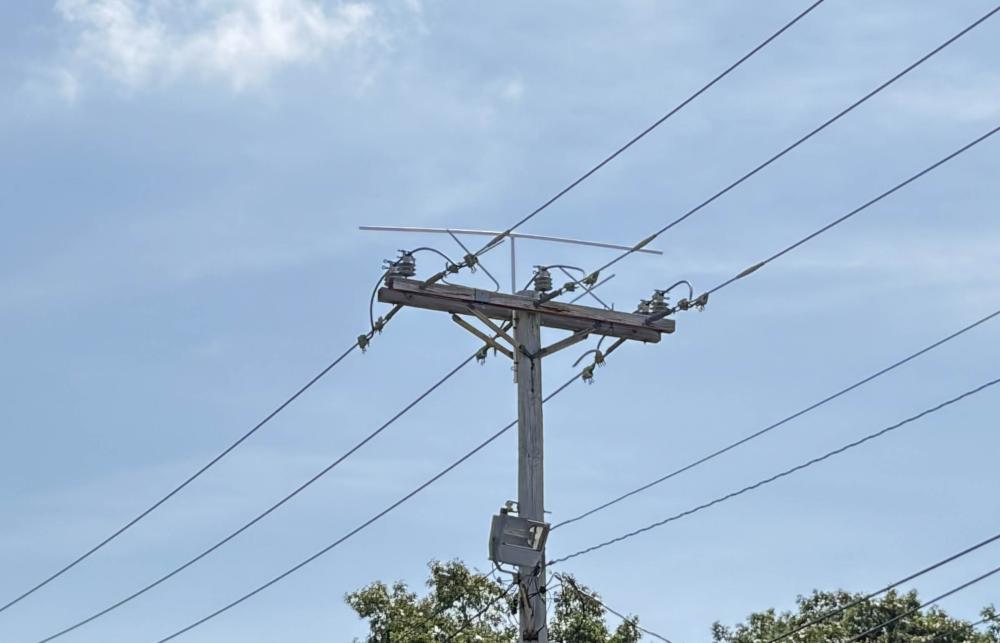 Raptor Guards and a T-type deterrent are used in tandem to keep birds off this pole.
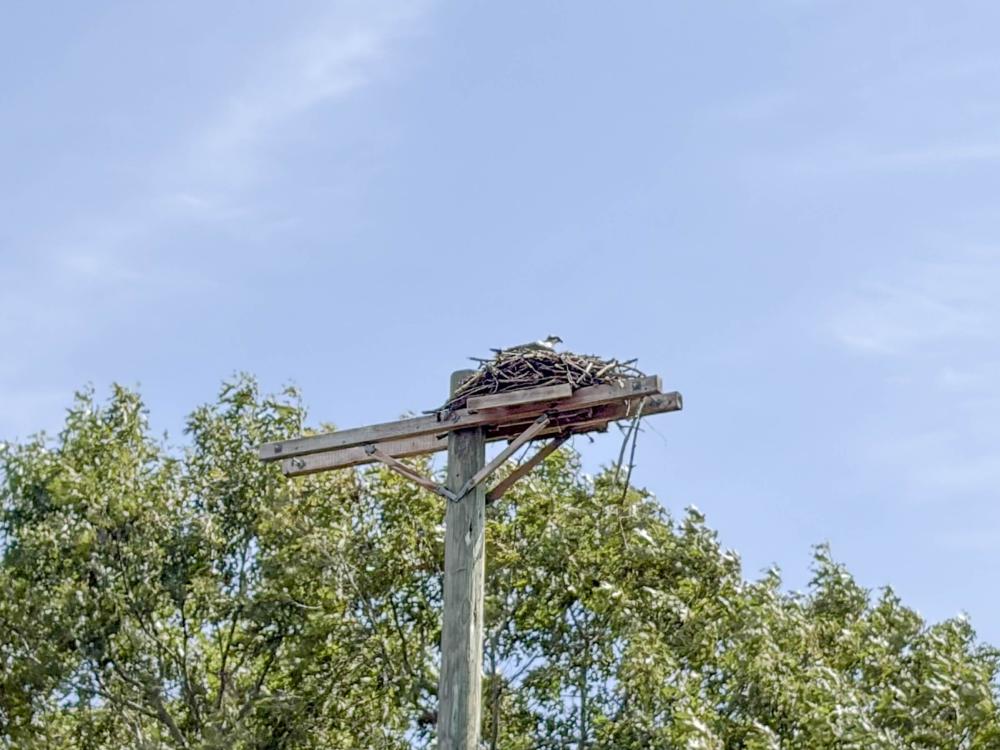 Eversource was able to build this platform on a support pole with no wires.
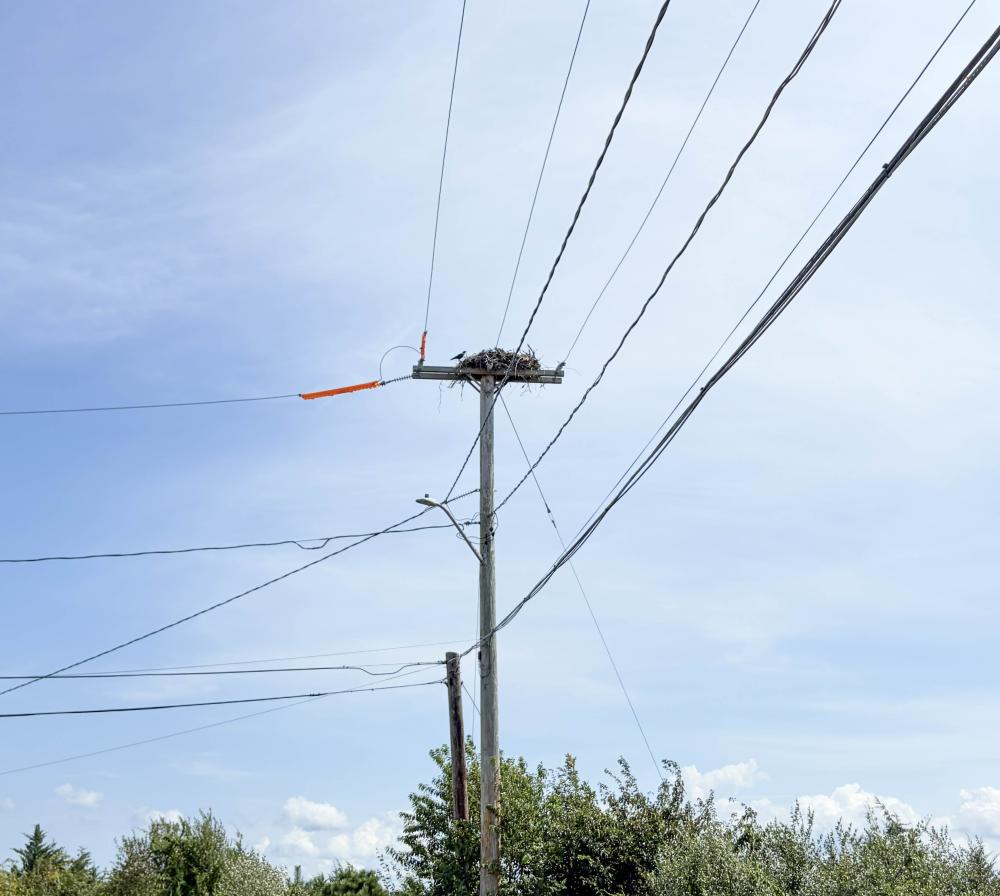 This pole in Swifts Beach has been partially de-energized for eight years to let the ospreys nest on it. The lowest wire is still live, but is covered in orange insulation to protect the wire and the birds.
Ospreys return to places where their nests used to be, even after the nests are removed, like this pole in Swifts Beach. Photos by Christian Uva
Eversource de-energized this pole along Minot Avenue so ospreys could continue to nest safely.
Raptor Guards and a T-type deterrent are used in tandem to keep birds off this pole.
Eversource was able to build this platform on a support pole with no wires.
This pole in Swifts Beach has been partially de-energized for eight years to let the ospreys nest on it. The lowest wire is still live, but is covered in orange insulation to protect the wire and the birds.
This pole in Swifts Beach has been partially de-energized for eight years to let the ospreys nest on it. The lowest wire is still live, but is covered in orange insulation to protect the wire and the birds.
Ospreys return to places where their nests used to be, even after the nests are removed, like this pole in Swifts Beach. Photos by Christian Uva
Eversource de-energized this pole along Minot Avenue so ospreys could continue to nest safely.
Raptor Guards and a T-type deterrent are used in tandem to keep birds off this pole.
Eversource was able to build this platform on a support pole with no wires.
This pole in Swifts Beach has been partially de-energized for eight years to let the ospreys nest on it. The lowest wire is still live, but is covered in orange insulation to protect the wire and the birds.
High above the street, large X-shaped pieces of metal called Raptor Guards sit on top of electrical poles. But in this case, X doesn’t mark the spot.
In fact, they deter ospreys that try to nest near high-voltage wires. Eversource Energy installs them on power poles to prevent the birds from settling in and creating hazards.
“The goal is keeping the ospreys safe and keeping them off our utility poles to the greatest extent that we can,” said Evan Ehrlich, an environmental permitting and licensing specialist for Eversource.
A growing osprey population on the South Coast is an environmental success story – and a feathery source of headaches for the power company. In July, Swifts Beach residents expressed outrage at Eversource for removing a problematic nest in their neighborhood.
In the wake of that controversy, the company took the opportunity in late August to show Wareham Week how it handles the threatened birds’ homebuilding.
Ospreys, mistaken for buzzards by early visitors to this coast, are the birds responsible for the name “Buzzards” Bay. Driven to “endangered” status in the mid-20th century, largely by the pesticide DDT, the population began recovering after DDT was banned in 1972 and with the help of human constructed osprey nesting poles.
The birds are still classified as “threatened,” with the biggest current threat being a decline in the population of the osprey’s fish-food favorite Atlantic menhaden.
But there are enough of them around to build their large nests of sticks atop high poles, sometimes near live wires – risking fire, outages, and osprey electrocution.
To help protect the birds and the power supply, Eversource created its Cape Cod Osprey Management Plan, which it employs in Wareham and other coastal towns. The 2022 plan, created in collaboration with the Massachusetts Audubon Society, the New England Wildlife Center and others, spells out how the company can deal with problematic nests.
Ospreys, who migrate south for the winter and back in the spring, build their nests around mid-March and usually inhabit them until August and September before heading south. Electric fields operations senior supervisor Rob Forde said that crews try to remove nests in problematic locations as early as possible, before the birds lay eggs.
Eversource crews can’t just remove the nests whenever they see them. The Migratory Bird Treaty Act of 1918 prevents people from disturbing ospreys and other migratory birds, along with their nests, unless there is a threat of a power outage or failure of other mechanical operation.
Eversource does have a permit, however, to remove nests during emergency situations where there’s an immediate risk of a fire.
If there is a threat, crews first have to check the nest to make sure that there are no chicks or eggs in it. Once they confirm that the nest is empty, they take the nest down. Crews have to act quickly, since they’re trying to avoid being shocked by thousands of volts of electricity, Forde said.
Ospreys build sturdy nests. They often return to the same nest year after, so they build the nests with thick sticks to survive harsh New England winters. Because of this, crews often take the nests down in one fell swoop, Forde said.
“They’re definitely very good at engineering nests,” Ehrlich said.
Once cleared, the energy company uses three different deterrents, or tools used to keep birds from nesting on poles in the future. Most often, they use Raptor Guards, T-shaped PVC pipes called T-types or a mix of the two.
In some cases, Eversource crews don’t need to remove the nests. They can de-energize a set of wires or the entire electrical pole to avoid risk of the nest catching fire. They only take poles offline if they’re not needed to provide energy to other areas, Forde said.
One pole in Swifts Beach has hosted a nest for eight years. Forde said crews de-energized all but one wire on the pole to allow the nest to stay put.
If crews can install a platform to relocate the nest to, they will. Along Minot Avenue, they were able to build a platform on a support pole near where a nest had previously been. Forde said crews try to use sticks from the old nest to keep it familiar for ospreys.
But Ehrlich said this only happens in rare circumstances. Eversource has to navigate siting and resource constraints, private property ownership and wetlands permits to be able to erect a platform
“In a lot of these areas we’re very much constrained in what we can actually do. So that’s why our main priority is keeping the birds safely off our poles,” Ehrlich said.
Residents have complained about Eversource removing nests from poles, only to have the ospreys return to a home that doesn’t exist anymore. Forde said that when residents voice their concerns, he tries to have face-to-face conversations with them to explain why the nests have to come down. “We try to do everything we can to protect the bird, and sometimes that requires us to remove the nest,” he said. “And most people, a good portion of people, understand.”
Jamie Bogart, a bird conservation specialist who’s worked at the Lloyd Center for the Environment in Dartmouth for 26 years, said that ospreys often return to places they originally built nests, even after they’re removed. But despite their persistence, they’ll find other homes. “Odds are the birds are going to find some alternative somewhere,” he said.
Bogart said it’s important to have companies like Eversource that are proactive about wildlife management and conservation in the area, especially as bird populations have increased over time.
“It’s important to have an industry that’s willing to respond as they do,” he said. “And they’re the only ones that are equipped to deal with birds in this area.”