











20-year sewer and river improvement plan proposed
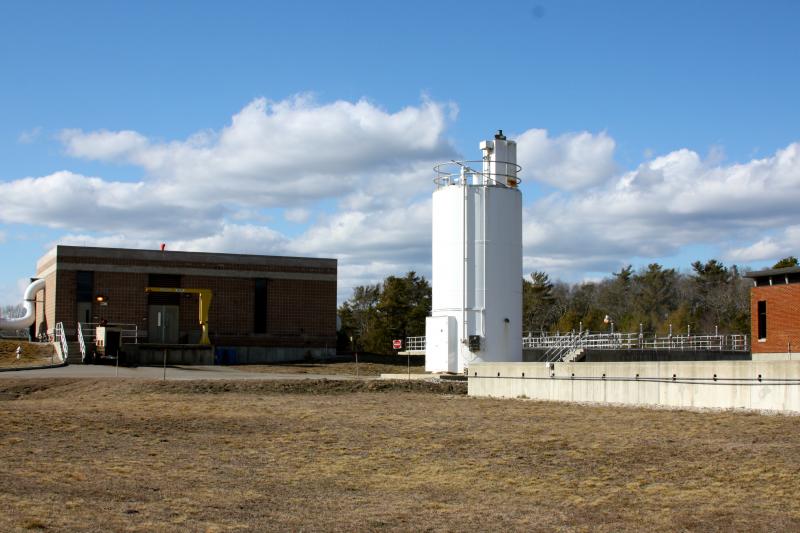 Sewer plant stock photo.
Sewer plant stock photo.
Sewer plant stock photo.
The Sewer Department has announced its latest Comprehensive Wastewater Management Plan, which would to reduce nitrogen 79% by 2045.
“I have to say the original plan was the stupidest thing I’ve ever read in my entire life,” said Select Board Chair Judith Whiteside, “This makes sense.”
According to the Mass Estuaries Project, the amount of nitrogen discharged into the Wareham River needs to be reduced by 79%. The Project determined that 43% of the excess nitrogen is due to septic systems and 16% from the town's wastewater treatment facility.
The town' plan works in four stages, each stage lasting five years. Each stage has specific steps that would decrease the amount of nitrogen and simultaneously improve the sewer system and sewer the majority of Wareham.
As explained by Sewer Department Director Scott Kraihanzel, the first phase runs from 2025 to 2030 and would decrease the nitrogen levels by 9% of the total 79% needed. This would be done by introducing non-sewer nitrogen reductions such as fertilizer restrictions, stormwater improvements and bog restoration planning. They would slowly start to extend the sewer system's capacity and improve biosolids handling.
The Sewer Department has been sending biosolids to a Rhode Island plant, which will be closing. The Department will be looking into where to send the solids that will make the most sense.
The second phase is 2031 to 2035, with a goal of 33% of the nitrogen reduction goal. This would start by applying to upgrade the sewer plant to be permitted to put out 2 million gallons a day. Currently the plant is permitted for 1.54 million gallons and puts out about 1 million gallons a day.
The town would start acting on bog restoration projects during this stage. Studies would be done to the Weweantic River and Buttermilk Bay to test their nitrogen levels.
Between 2036 and 2040, the goal is to have 76% of the total nitrogen goal completed. This would be done by expanding the sewers. They would implement adaptive management, changing the plan as it goes to continue to work.
The last phase runs from 2041 to 2045, with 100% of the 79% decrease in nitrogen hopefully being accomplished. By then, the Sewer Department hopes to have upgraded the plant to be permitted to output 3 million gallons a day and sewer the remaining and possible parts of town.
Kraihanzel explained that the Sewer Department, as a separate project, plans to move the force main from its current position on Minot Avenue to Sandwich Road. The current main is 10 years past its five year life expectancy.
The cost of replacing the main on Minot Avenue or constructing a new main on Sandwich Road is identical at about $26 million, according to Kraihanzel. Constructing the new main has the advantage that it be use to expand the sewer system in town, and allows for sewering for north of Route 495.
The sewer expansion would allow for the potential use of the old force main to create a new outfall location, which could allow up to 4 million gallons a day of output. Kraihanzel says this could save the town hundreds of millions of dollars in the long run.
“It’s a really exciting potential to fix one problem while solving another, and it would be a massive cost save for the town,” said Kraihanzel.
The Sewer Department was awarded a grant to continue looking into and improving this plan.
“That’s as exciting as wastewater can get,” he added.
While the idea of "urine diversion" to reduce nitrogen pollution was raised, Kraihanzel felt that this was not feasible. “Here’s my take on it, I poo-poo it,” said Kraihanzel, “I can’t get people to wash their hands after going to the bathroom. I can’t imagine getting people to pasteurize properly their urine.”
While it is an option they are considering for the future in unsewered areas, he does not see it as a town-wide alternative.
The Select Board agreed to work with the Sewer Department to write a letter of support for the four stages of the Comprehensive Plan for the upcoming Spring Town Meeting on Monday, April 27.