











Pee-cycling: Residents learn how to use urine in their gardens
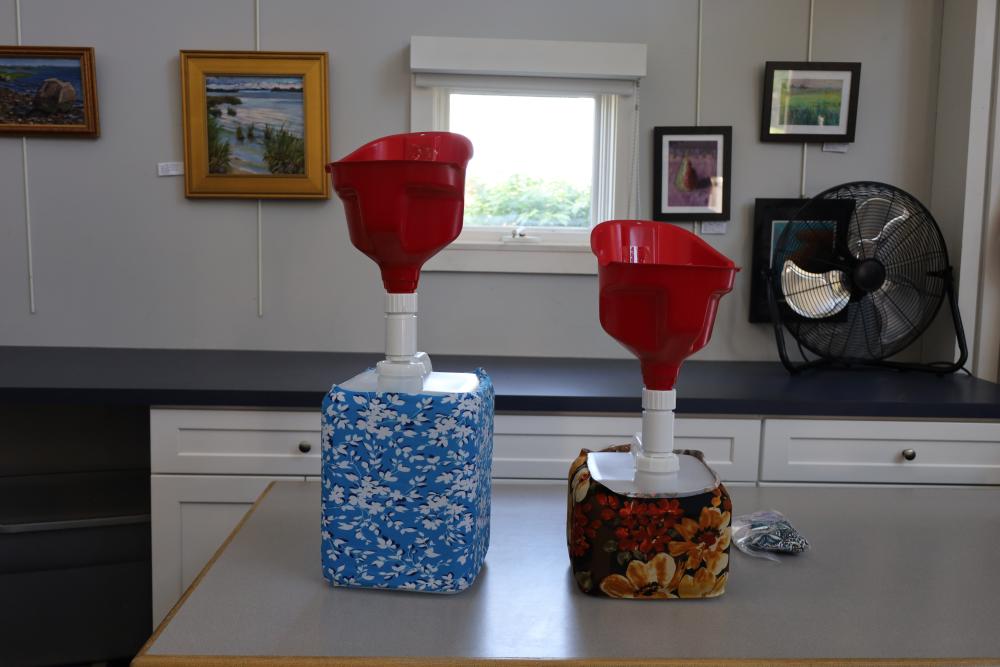 Residents learned how to use their urine as garden fertilizer, which they collect through containers like these "cubies," during a talk about urine diversion on Tuesday, June 9. Photos by Nick Mossman
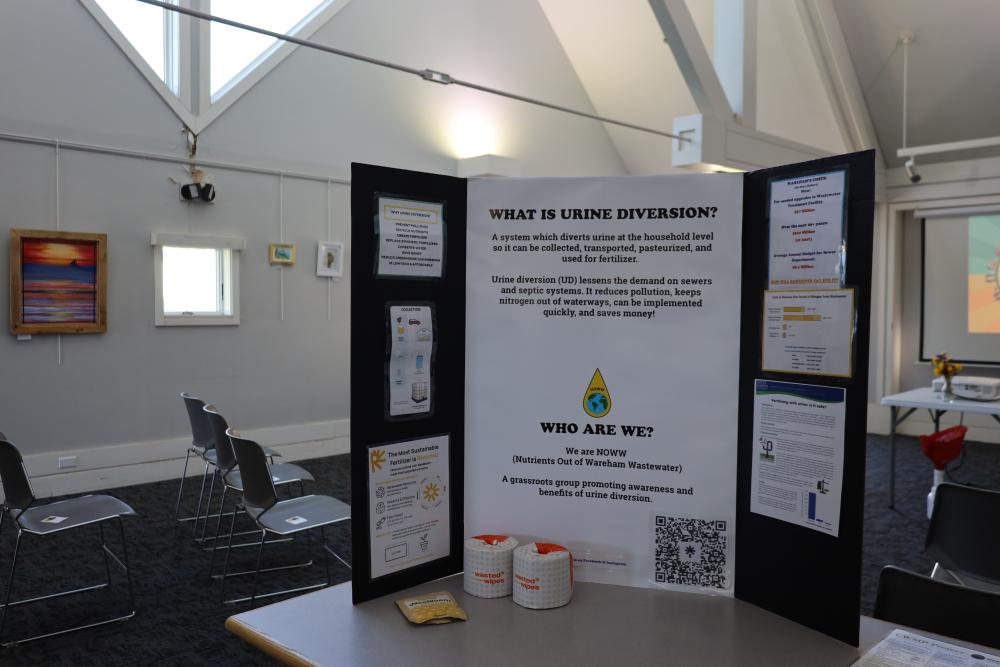 A poster about urine diversion at the talk.
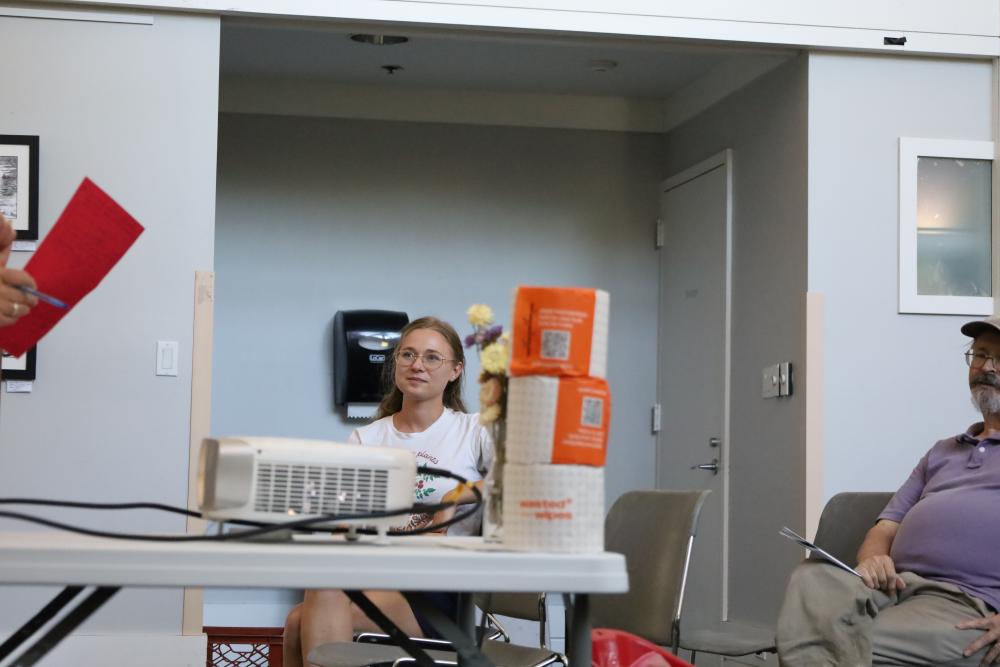 Attendees who correctly answered trivia questions about urine diversion won bamboo, PFAS-free toilet paper.
 Participants go with the flow while learning about urine diversion.
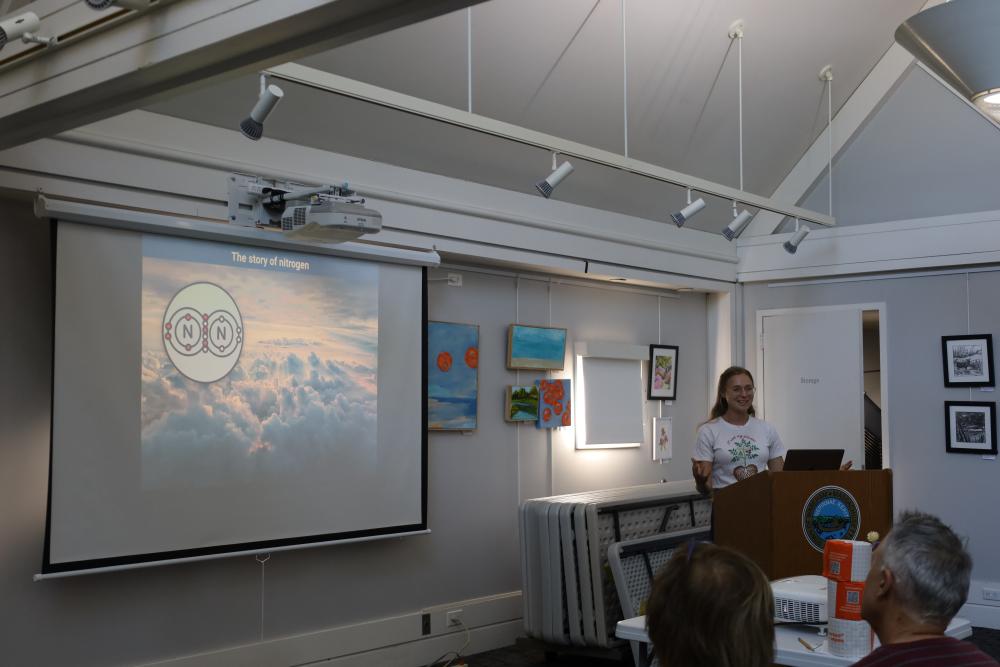 Julia Cavicchi talks about nitrogen in fertilizers and wastewater.
Residents learned how to use their urine as garden fertilizer, which they collect through containers like these "cubies," during a talk about urine diversion on Tuesday, June 9. Photos by Nick Mossman
A poster about urine diversion at the talk.
Attendees who correctly answered trivia questions about urine diversion won bamboo, PFAS-free toilet paper.
Participants go with the flow while learning about urine diversion.
Julia Cavicchi talks about nitrogen in fertilizers and wastewater.
Julia Cavicchi talks about nitrogen in fertilizers and wastewater.
Residents learned how to use their urine as garden fertilizer, which they collect through containers like these "cubies," during a talk about urine diversion on Tuesday, June 9. Photos by Nick Mossman
A poster about urine diversion at the talk.
Attendees who correctly answered trivia questions about urine diversion won bamboo, PFAS-free toilet paper.
Participants go with the flow while learning about urine diversion.
Julia Cavicchi talks about nitrogen in fertilizers and wastewater.
From vegetable scraps to coffee grounds to eggshells, plant growers have long experimented with unconventional fertilizers. During a talk at the Wareham Free Library on Tuesday, June 9, residents learned a new way to enrich their gardens with a pee-culiar ingredient: their urine.
According to Julia Cavicchi, education director at the Rich Earth Institute, human pee, sometimes called "liquid gold," can be just as effective as synthetic fertilizer in giving plants the nutrients they need to grow. In addition, saving urine can be a cheaper and more eco-friendly alternative to traditional fertilizers, Cavicchi said.
The Rich Earth Institute is a Vermont-based organization dedicated to promoting the use of human waste as a resource.
The practice is called "urine diversion," the process of separating urine from solid waste and potentially using it for other purposes, like fertilizer in a garden.
During Tuesday's talk, attendees were encouraged to collect their urine at home with compostable toilets or "cubies," multi-gallon, sealable, cube-shaped containers with a funnel at the top for peeing in.
To fertilize a garden, urine diverters can use their collected pee and apply it to the soil around plants that are past the germination stage but have not had any fruits or seeds appear. Cavicchi said that gardeners should avoid leaves and stems, applying urine directly to the ground about four inches from the base of an annual plant. The gardener should then cover the urine with moist soil or water the soil.
According to Cavicchi, the World Health Organization recommends that people should wait at least one month after fertilizing with urine before harvesting crops they'll eat raw. She said that urine from healthy people is generally pathogen-free and when collected from home, is safe to use in a garden without sanitization.
Cavicchi said that pee is nutrient-rich with nitrogen, phosphorus and potassium.
"Most of the time, we flush those nutrients into our flush toilets and just move them away," Cavicchi said.
If not contained, those nutrients can pollute water bodies, kill sea life and make water undrinkable, according to Cavicchi.
"The time has never been more right to try to rethink what we're doing with our waste and our water systems," she said.
The benefits of using urine extend beyond environmental ones, according to Cavicchi. Looking to save money? Urine luck.
According to the Rich Earth Institute, estimates suggest that practicing urine diversion could cost as little as one-tenth of traditional wastewater use. Cavicchi said that Americans flush around 900 billion gallons of water each year.
Urine diversion is making a splash in Wareham.
Nutrients Out of Wareham Wastewater co-chair Milly Burrows uses a "cubie" at home to fertilize plants in her garden.
"Definitely my gardens are healthier than they used to be," Burrows said. "My plants are taller, they're spreading … so yeah, definitely benefits in the yard."
Burrows said that urine diversion helps protect the environment, conserves water and returns nutrients to the earth.
"It's a way to take better care of the Earth and to leave a better future for our kids and our grandkids," she said.