











Voters approve sewage plans, budget and the elimination of plastic bag usage in town
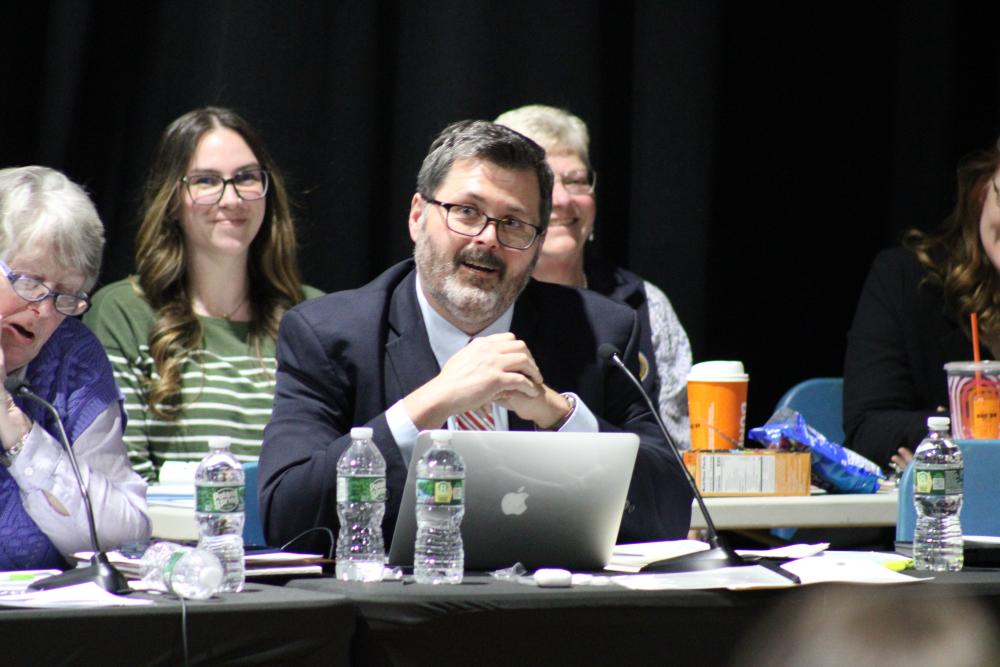 Town Administrator Derek Sullivan detailing the town budget. Photos by Brandy Muz
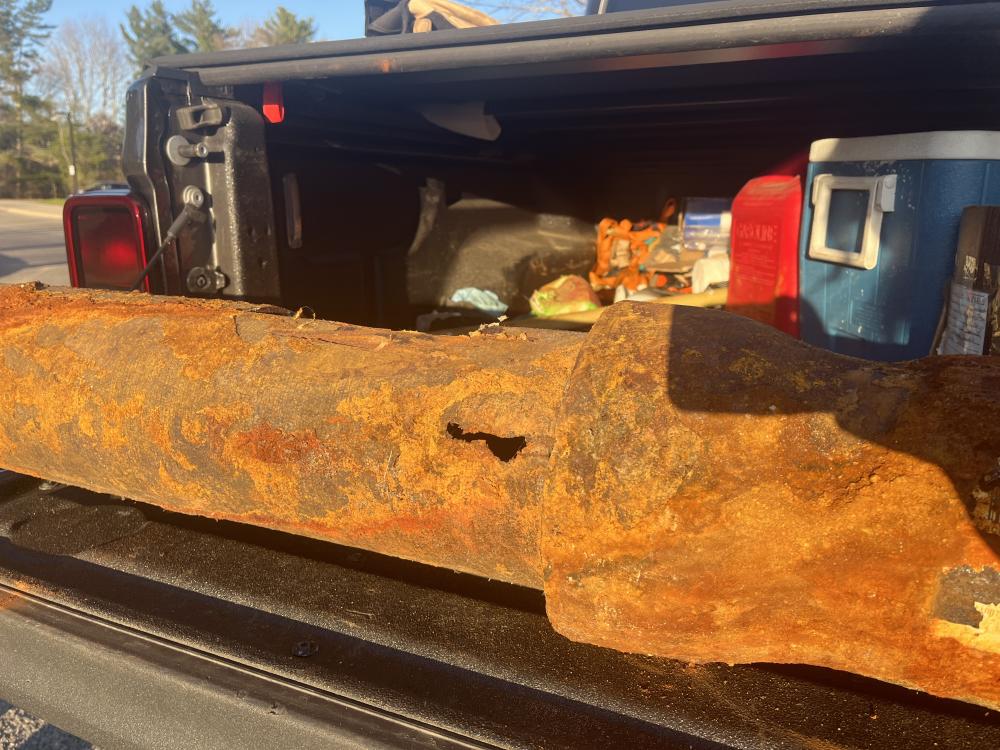 What corroded pipes look like, which can cause major sewage flooding.
 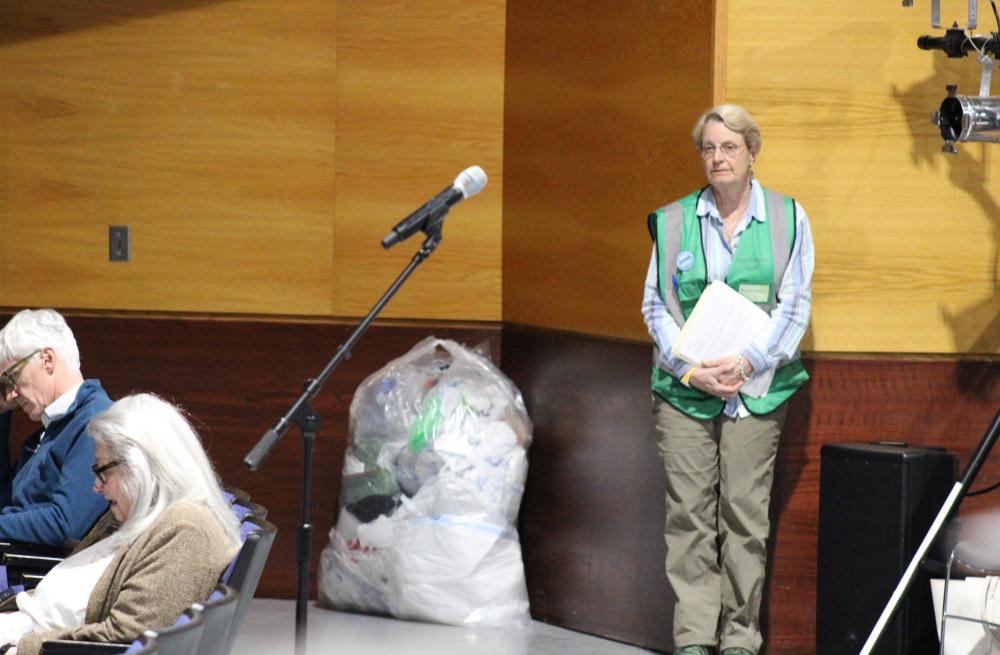 Hilary Greene with her bag of plastic bags, emphasizing over-usage.
 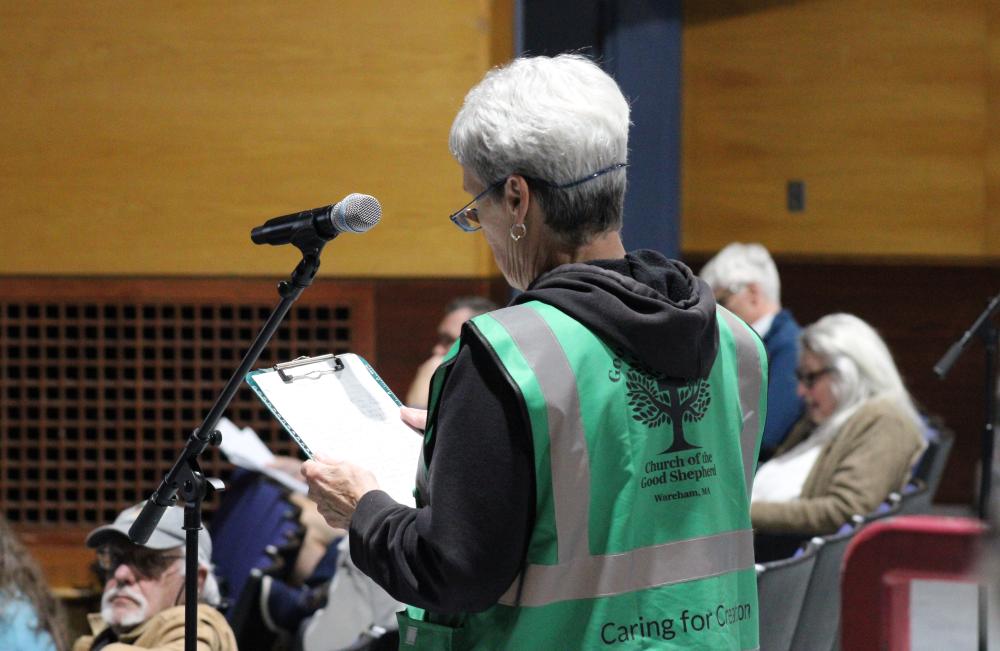 Jo-Anne Finn donned her green vest for Town Meeting.
 With an expansive new building, Noelle Humphries details what's to come with Cranberry Manor Phase II.
Town Administrator Derek Sullivan detailing the town budget. Photos by Brandy Muz
What corroded pipes look like, which can cause major sewage flooding.
Hilary Greene with her bag of plastic bags, emphasizing over-usage.
Jo-Anne Finn donned her green vest for Town Meeting.
With an expansive new building, Noelle Humphries details what's to come with Cranberry Manor Phase II.
With an expansive new building, Noelle Humphries details what's to come with Cranberry Manor Phase II.
Town Administrator Derek Sullivan detailing the town budget. Photos by Brandy Muz
What corroded pipes look like, which can cause major sewage flooding.
Hilary Greene with her bag of plastic bags, emphasizing over-usage.
Jo-Anne Finn donned her green vest for Town Meeting.
With an expansive new building, Noelle Humphries details what's to come with Cranberry Manor Phase II.
With democracy at the forefront, Wareham residents made their voices heard at the annual Spring Town Meeting.
Community members filled the auditorium at Wareham High School, 7 Viking Drive, to help vote for the future of Wareham Monday, April 27. With big items on the agenda and big prices all items passed unanimously.
One of the well-discussed topics was the usage of $26 million for sewer improvements.
Russ Kleekamp of Environmental Design and Research said the existing 18-inch force main, which is more than 50 years old and showing significant corrosion, poses a growing risk of failure.
"Replacing the age infrastructure is something that benefit the whole town of the future," he said.
Environmental Design and Research is a design professional corporation that specializes in water, wastewater, civil and environmental engineering services. Kleekamp said that leaving the pipes as they are could mean sewage spillage into waterways within Wareham.
Acting now could avoid costly emergency repairs and environmental damage and could mean eligibility for low or zero-interest financing through the state’s Clean Water State Revolving Fund.
Estimated user costs range from about $125 to $200 per user, depending on final bids and funding.
After months of deliberation by the Finance Committee, School Committee and Select Board, the town budget was approved by voters.
The town budget for FY2027 comes in at $74,548,925. Town Administrator Derek Sullivan stressed how difficult it was to allocate proper funds to the budget this year citing issues like the February blizzard that cost the town almost $1 million.
"We balanced the budget— it's not perfect but it got us here," Sullivan said.
Voters approved a ban on single-use plastic grocery bags, following testimony from residents who pointed to past success reducing litter. Jo-Ann Finn petitioned the elimination and said the town’s earlier ban on small liquor bottles, or “nips,” led to noticeably cleaner streets.
“I wasn’t sure if it would make a difference but take it from me, it really has,” she said, adding she now rarely sees them while picking up trash.
Finn and members of the Church of the Good Shepherd’s Good and Green group urged officials to take a similar step with plastic bags, citing environmental and cost concerns. The group said the bags often end up in trees, ponds and waterways, where they harm wildlife and break down into microplastics.
Recycling Center volunteer Amanda Cobb highlighted the scale of the issue, noting the town collects multiple large bags of plastic weekly at the recycling center alone.
The new ruling does not apply to items such as produce bags, trash bags or pet waste bags. The change will shift costs to reusable or paper options and rely largely on education and cooperation for enforcement.
Both items using Community Preservation Act funding were approved.
New housing for low-income seniors will be underway thanks to voters approval of $300,000 in Community Preservation Act funding for the second phase of the Cranberry Manor senior housing development.
Community Preservation Funds come from a surtax on property values above $100,000 and, under the terms of the state’s Community Preservation Act, must be spent on historic preservation, open space preservation, recreation and affordable housing.
The funding will support a 40-unit expansion behind the existing Cranberry Manor complex off Cranberry Highway. The project will create housing for residents age 62 and older, with a mix of income-restricted units.
Associate Real Estate Development Director, Noelle Humphries, spoke on behalf of NeighborWorks Housing Solutions and said the development will include on-site management, supportive services and a resident service coordinator.
Plans also call for energy-efficient construction, including solar panels and “passive house” design elements.
The $300,000 request represents just over 1% of the total project cost, with the remainder expected to come from state and other public funding sources. Humphries said the company hopes to begin construction in the fall.
Town Meeting voters also approved $700,000 in Community Preservation Act funding to support the restoration of land along Beaverdam Creek.
Speaking on the article, Conservation Commission Chair Sandra Slavin said the project will convert about nine acres of active cranberry bogs back to a natural wetland system, improving water flow and reducing nitrogen entering local waterways.
"We have the funds through the Community Preservation Act, and this is a chance to save the land and restore it to its natural state while improving water quality in our watershed," Slavin said.
The property, located along Route 6 toward Marion, will be purchased by the Buzzards Bay Coalition for about $1 million, below its $1.4 million appraised value. The difference will allow the current owner to continue harvesting cranberries for several years before full restoration begins.
Slavin noted the effort aligns with broader goals to reduce nutrient pollution and preserve open space.