











Request to change GPS home confinement denied in explosion case hearing
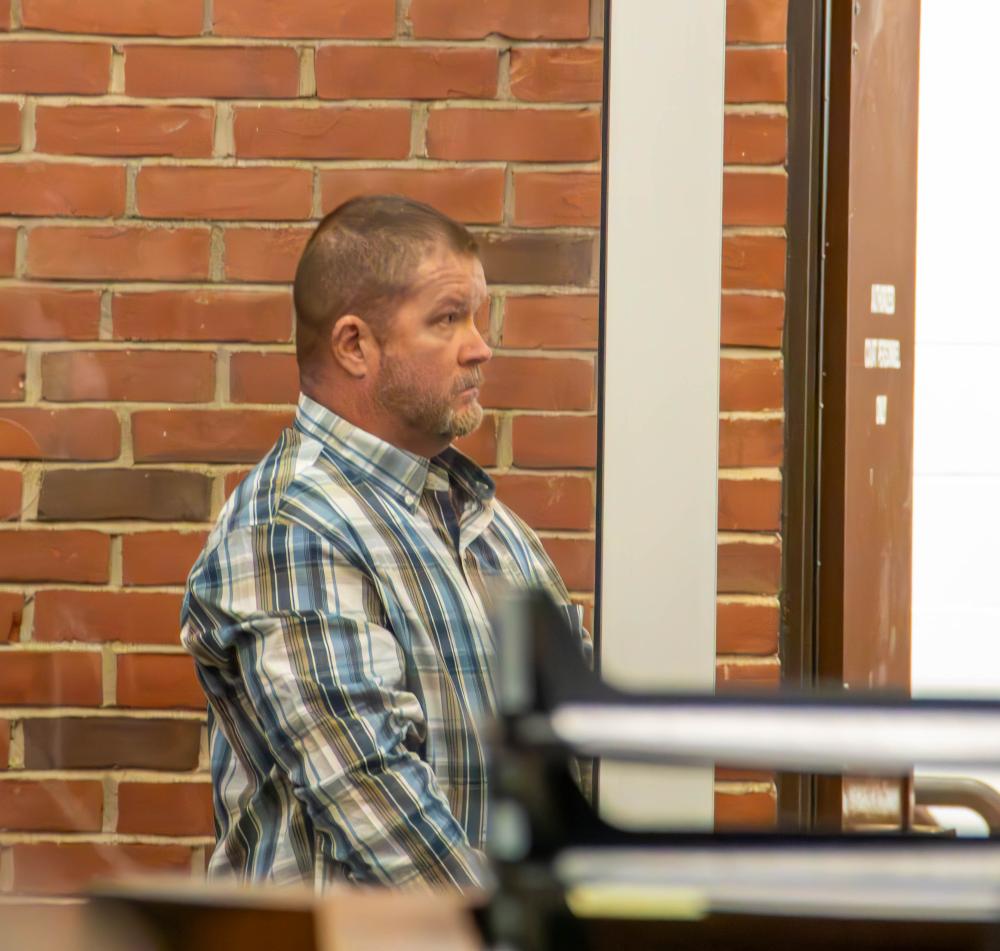 Mark Halpin at the Oct. 9 hearing. Photo by Bobby Grady
Mark Halpin at the Oct. 9 hearing. Photo by Bobby Grady
Mark Halpin at the Oct. 9 hearing. Photo by Bobby Grady
Following a chemical explosion at his home in early October, Mark Halpin’s defense attorney said he posted his $10,000 bail but a change to his current GPS home confinement was denied.
Halpin, 50, is being charged with one count of the possession of explosives and one count of the use of explosives with the intent to cause fear or panic after the chemical explosion at his 1 Aunt Maryville Lane home on Oct. 3. The explosion resulted in local, state and federal police, fire and bomb squad technicians responding and spending more than 10 hours removing bomb-making materials from Halpin’s home.
In a pre-trial hearing Wednesday, Dec. 10, Halpin’s defense attorney Kimberly Cronin requested Halpin have his home confinement lifted between 6 a.m. and 7 p.m., which was denied by Judge Edward Sharkansky.
After posting bail on Oct. 16, Halpin’s release conditions included home confinement with a GPS monitor but he could still attend legal, mental health and medical appointments. Conditions also demanded Halpin must not possess any weapons or incendiary devices.
During the Dec. 10 hearing, prosecuting attorney for the Plymouth County District Attorney's office John Brainard said state investigators are still testing material recovered from Halpin’s home following the explosion.
This is the second hearing in Halpin’s case with the first being on Oct. 9.
During the Oct. 9 hearing, prosecuting attorney Jordyn Carpenter said Halpin told authorities he was loading a toy cannon and dropped it which caused the explosion.
Cronin said Halpin “appeared to be a hobbyist” of fireworks and model rockets because explosive materials consistent with the two were found in his house.
At the hearing however, Carpenter noted the Massachusetts State Police Fire and Explosion Investigation Unit reported finding other items associated with the “clandestine manufacturing of explosives.”
She added that bomb squad technicians said the materials found at the location of the blast did not make sense and they did not believe Halpin’s story.Investigators also reported finding broken windows and debris as well as warped and melted appliances at the location of the blast.
One of the main questions in Halpin’s case moving forward is the “intent to harm.”
The more serious charge of “secreting, throwing, launching, or placing of explosives,” requires an “intent to cause fear, panic or apprehension in any person, ignite, explode or discharge such an explosive device or substance or release a chemical biological or nuclear weapon.”
During the Oct. 9 hearing, defense attorney Cronin argued evidence of intent was not present which Judge Terese Wright agreed with.